We only use strictly necessary cookies for authentication and payment processing — no tracking or marketing. Privacy Policy
AI That Fixes Your Production
Crashes While You Sleep
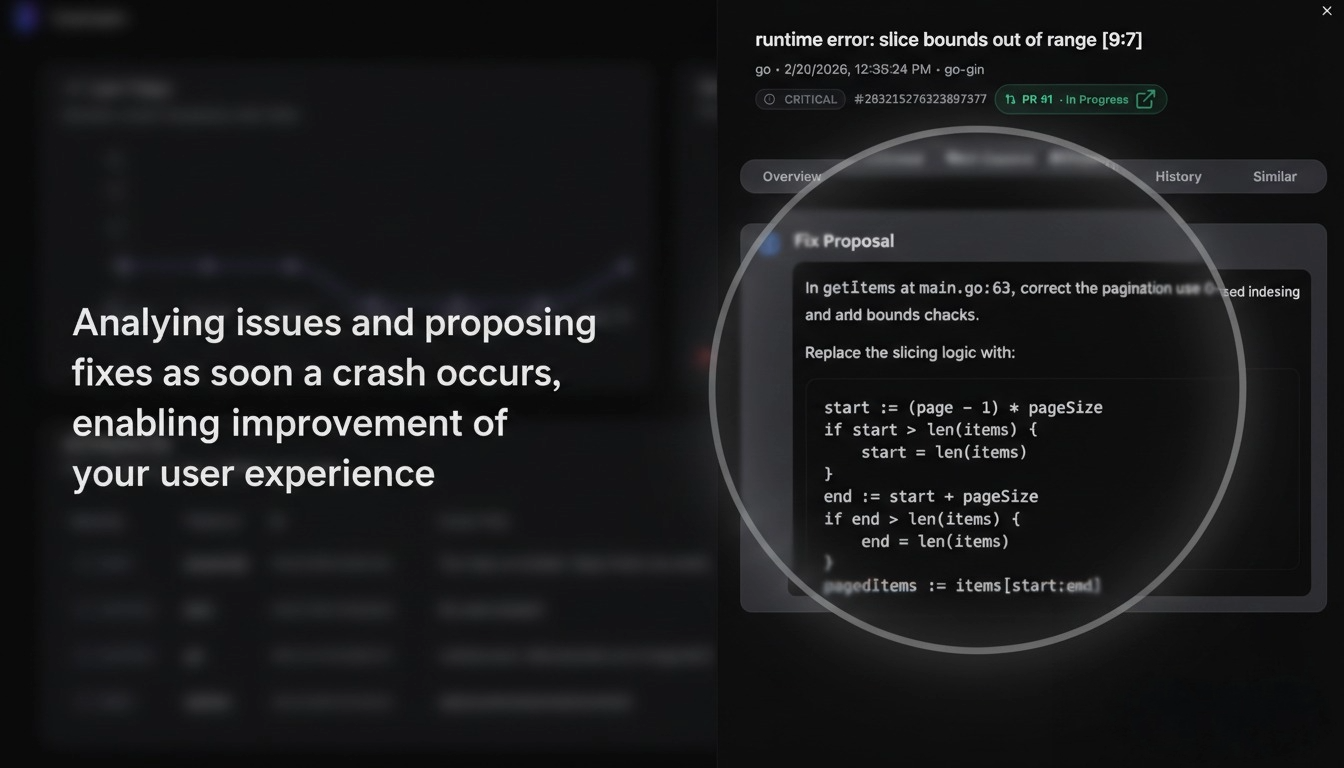
CrashLoom analyzes crashes across all your apps, identifies root causes, and creates ready-to-merge pull requests. You review and approve—never direct deployment.
Not a Replacement—An Enhancement
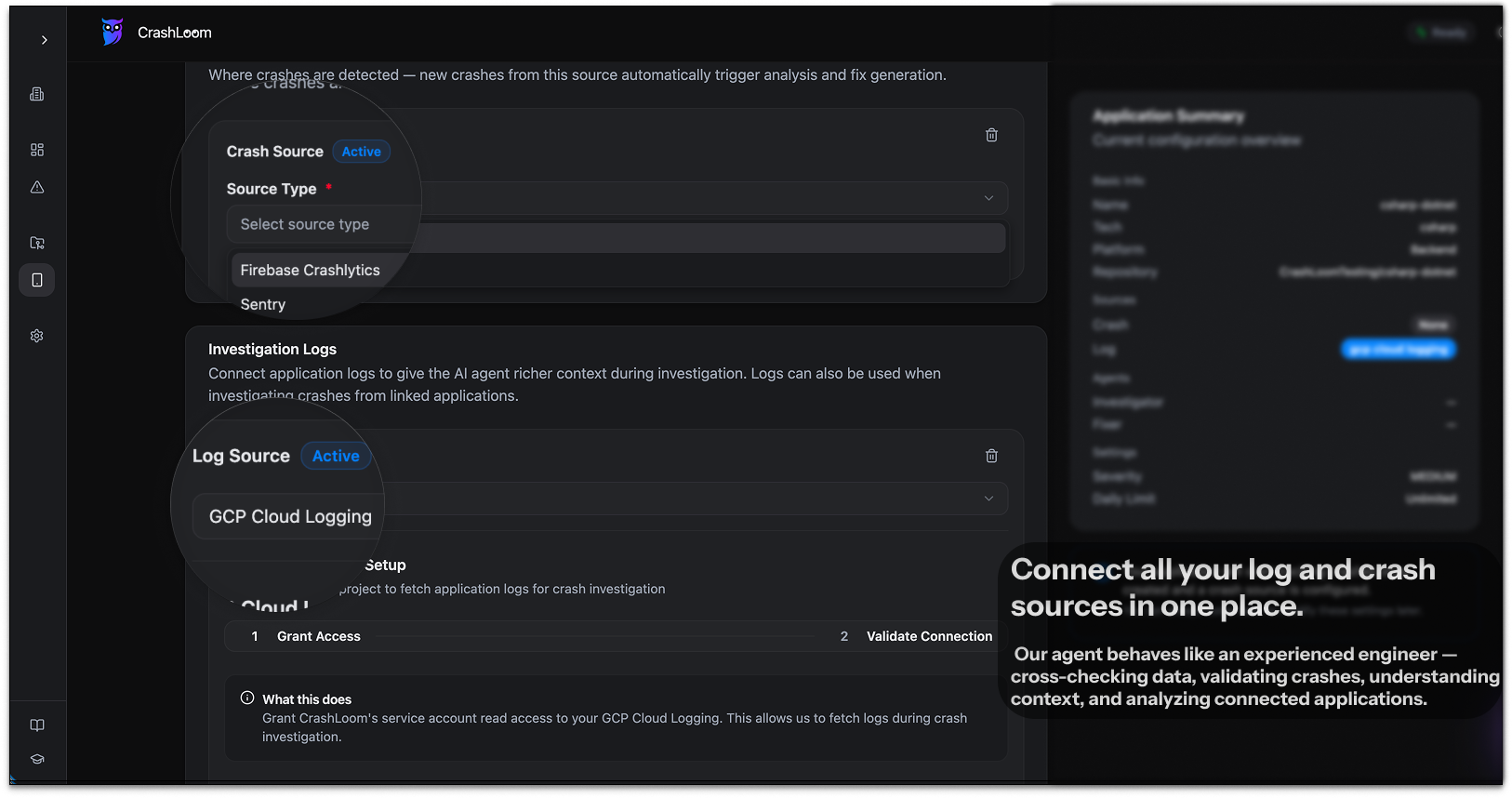
CrashLoom works with your existing tools like Sentry. We add intelligence to identify root causes across all linked apps and propose fixes.
Cross-App Intelligence
Analyzes crashes across all your applications to identify root causes in linked dependencies—something monitoring tools alone can't do.
Root Cause Detection
Goes beyond error logs. Identifies the actual source of issues even when they span multiple services or applications.
Automated PR Creation
Generates production-ready fixes and opens pull requests. You review, approve, and merge—full control always.
Intelligent Prioritization
Focuses on what matters most: issues with highest business impact, user reach, and frequency across your applications.
Suspect Commit Detection
Automatically identifies the commits most likely to have caused a crash using git blame analysis. PRs include suspect commits for faster root cause review.
Self-Hosted Sandbox
Run sandbox execution on your own Kubernetes cluster. Full control over the infrastructure where fixes are built and tested.
Slack & Discord Alerts
Get real-time crash alerts and investigation updates delivered to your team channels. Discord threads keep every crash's story in one place.
MCP Integration
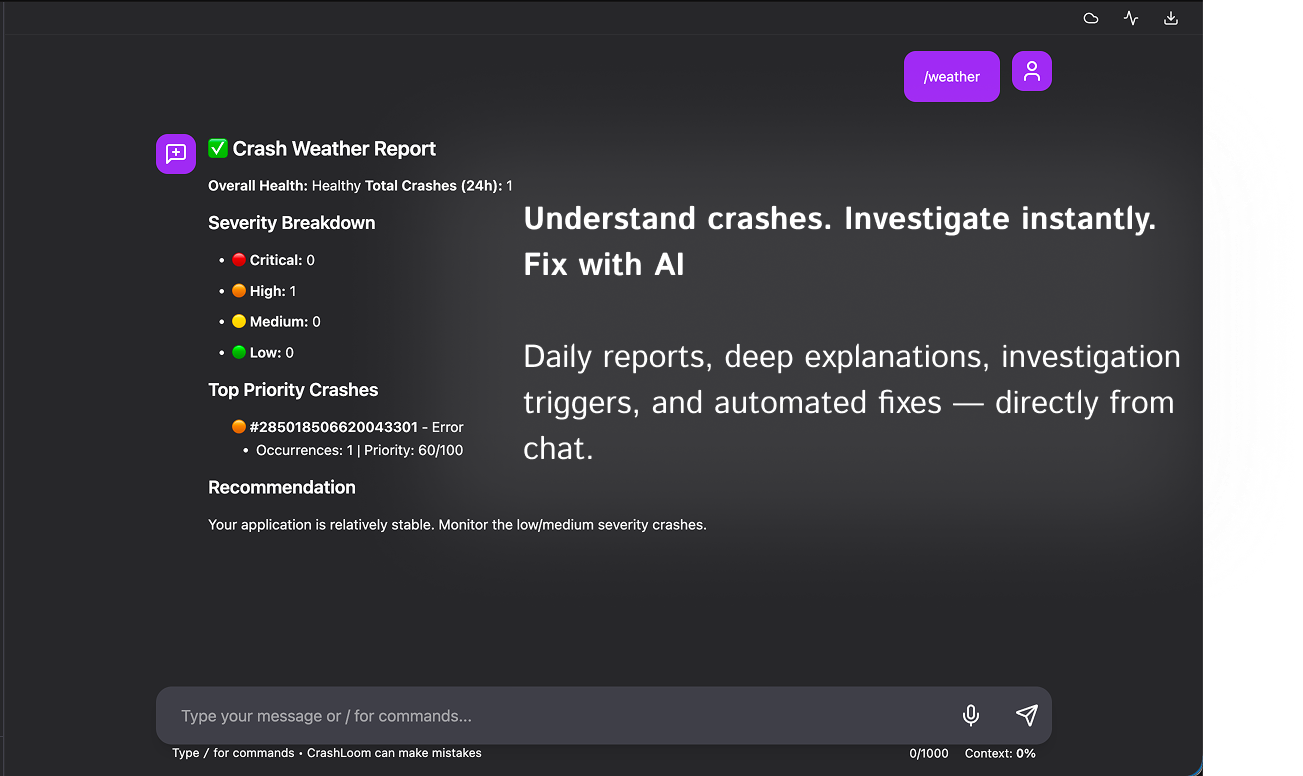
Connect CrashLoom to Claude, Cursor, and any MCP-compatible AI client. Query crashes, read investigations, and trigger fixes from your AI workflow.
How CrashLoom Works
Set up in minutes, then let the agent work around the clock.
Connect & Configure
Connect your monitoring tools and configure your reliability agent in minutes
Observe & Detect
Agent continuously monitors and detects issues across all your linked applications
Create PR for Review
Generates fixes and opens PRs that you review and approve—never direct deployment
You Stay in Control
Approve PRs, run CI/CD tests, and merge when ready — you're always in control
Frequently Asked Questions
Everything you need to know about CrashLoom
Does the agent deploy code directly to production?
No. The agent creates pull requests for you to review and approve. Every fix goes through your existing code review and CI/CD pipeline before deployment. You remain in full control of your codebase — the agent is your reliability assistant.
Why is app maintenance so time-consuming?
A significant portion of engineering time goes to triaging crashes, debugging production issues, firefighting incidents, and managing on-call rotations. This leaves less time for developing new features or building new applications. CrashLoom's reliability agent automates the maintenance burden so you can focus on what matters: innovation and growth.
How does the agent know what to fix?
The agent continuously monitors your applications through integrations with crash monitoring tools like Sentry, Firebase Crashlytics, and GitHub Issues. It analyzes crash patterns, error rates, and user impact to intelligently prioritize the most critical issues. Then it generates context-aware fixes based on your codebase, stack traces, and historical patterns.
How does pricing work?
Each plan includes monthly limits for investigations, fixes, and crash events, plus an LLM budget. You can also bring your own LLM keys (BYOLLM) on any plan.
What if the fix doesn't pass my tests?
When enabled, the agent can validate fixes against your CI/CD pipeline and retry up to 3 times if tests fail. It learns from test failures to improve subsequent attempts.
Is my code and data secure?
Yes. We use enterprise-grade encryption for all data in transit and at rest. The agent accesses only the minimum permissions needed (read access to crash reports, write access to create PRs). Your source code is never stored by CrashLoom — it is accessed temporarily during analysis and discarded after processing. All AI providers are accessed via their public commercial APIs.
How quickly can I get started?
Most teams are up and running in under 10 minutes. Simply connect your crash reporting tool (Firebase/Sentry/GitHub Issues), link your GitHub account, and the agent starts monitoring immediately. The free plan includes monthly limits—no credit card required to start.
How is this different from just using Sentry or Firebase?
CrashLoom doesn't replace those tools—it enhances them. While Sentry and Firebase alert you to crashes. CrashLoom connects to those same sources and GitHub Issues and adds cross-application intelligence to identify root causes across linked apps, then automatically generates fixes. Think of it as the missing piece that turns crash alerts into automated solutions.